Begin of page section:
Page sections:

  • Go to contents (Accesskey 1)
  • Go to position marker (Accesskey 2)
  • Go to main navigation (Accesskey 3)
  • Go to sub navigation (Accesskey 4)
  • Go to additional information (Accesskey 5)
  • Go to page settings (user/language) (Accesskey 8)
  • Go to search (Accesskey 9)

End of this page section. Go to overview of page sections

Begin of page section:
Page settings:

English en
Deutsch de
Search
Login

End of this page section. Go to overview of page sections

Begin of page section:
Search:

Search for details about Uni Graz
Close

End of this page section. Go to overview of page sections


Search

Begin of page section:
Main navigation:

Page navigation:

  • University

    University
    • About the University
    • Organisation
    • Faculties
    • Library
    • Working at University of Graz
    • Campus
    Developing solutions for the world of tomorrow - that is our mission. Our students and our researchers take on the great challenges of society and carry the knowledge out.
  • Research Profile

    Research Profile
    • Our Expertise
    • Research Questions
    • Research Portal
    • Promoting Research
    • Research Transfer
    • Ethics in Research
    Scientific excellence and the courage to break new ground. Research at the University of Graz creates the foundations for making the future worth living.
  • Studies

    Studies
    • Prospective Students
    • Students
  • Community

    Community
    • International
    • Location
    • Research and Business
    • Alumni
    The University of Graz is a hub for international research and brings together scientists and business experts. Moreover, it fosters the exchange and cooperation in study and teaching.
  • Spotlight
Topics
  • Our digital Advent calendar
  • Sustainable University
  • Researchers answer
  • Work for us
Close menu

End of this page section. Go to overview of page sections

Begin of page section:
You are here:

University of Graz Faculty of Humanities Department of Philosophy News Albert von Sachsen und die Calculatores-Tradition
  • About the Department
  • People
  • Sections
  • Our Research
  • Student Services
  • Events

End of this page section. Go to overview of page sections

Tuesday, 26 November 2013

Albert von Sachsen und die Calculatores-Tradition

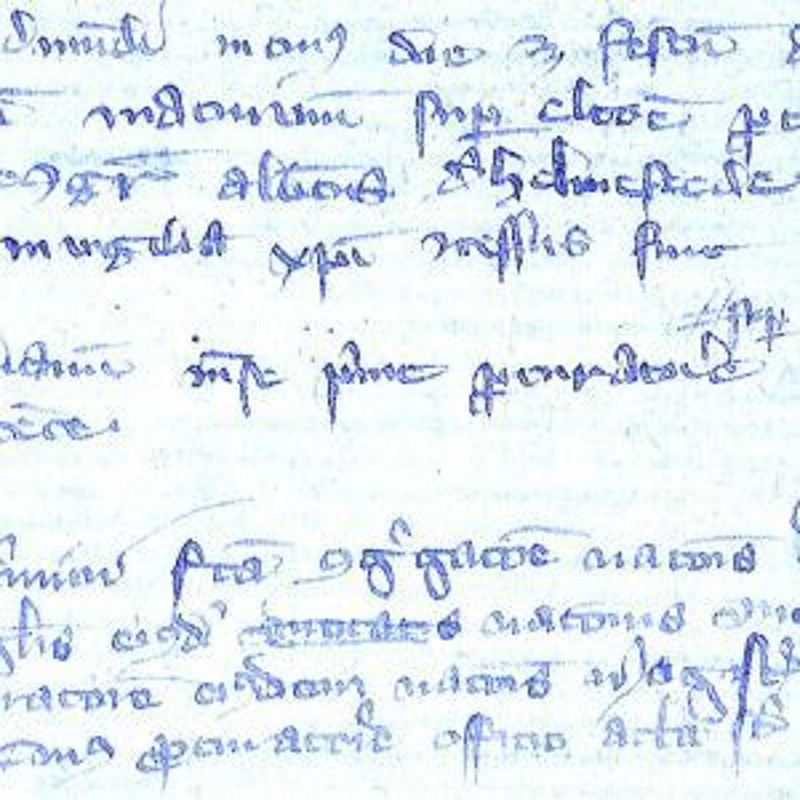
Bildausschnitt: Magister Albertus de Helmestede (Helmstedt), bekannt als Albert von Sachsen, Eintrag von seiner eigenen Hand, Ende 1351 (Handschrift Paris, Bibliothèque de la Sorbonne, Archives, Reg. 2-2, Bl. 17r)

Gastvortrag

von Dr. Daniel A. Di Liscia (LMU München)


Dienstag, den 26.11.2013, 14.00 Uhr,

Seminarraum SR 09.53,

Institut für Philosophie, Heinrichstr. 26/V, A-8010 Graz


Daniel Di Liscias Angaben zum Vortrag:


Die anfangs des 14. Jahrhunderts in Oxford entstandene Denkrichtung der "calculatores" veränderte in Form und Inhalt die an den Universitäten fest verankerte aristotelische Naturphilosophie. Ihre baldige Aufnahme in Paris brachte ein neues Bild der Physik und eine neue ideengeschichtliche Dynamik  innerhalb der aristotelischen Tradition mit sich, welche mindestens bis zur Zeit Galileis lebendig blieb.

Albert von Sachsens Verdienst in der Verbreitung der "Pariser-Physik" ist seit langem bekannt. Neue Forschungsprogramme über verschiedene Aspekte seines weit gefächerten Werkes - wie z. B. das lobenswerte Projekt einer Edition seiner Sophismata - müssen zweifellos einen Schritt zurück gehen und Alberts Rezeption und Verbreitung der calculatores-Tradition berücksichtigen.


In meinem Vortrag möchte ich zuerst eine allgemein verständliche Einführung zu den Haupttexten und Motiven der in Oxford geborenen "calculatores"-Tradition liefern. Auf dieser Basis habe ich vor, Alberts Rezeption dieses logischen und mathematiserenden Ansatzes zu diskutieren. Hierbei werde ich mich nicht auf alle möglichen Gebiete und  Verbindungspunkte zwischen Albert von Sachsen und der Tradition der Calculatores ausdehnen können und müssen, sondern ich werde mich auf das Spezialgebiet der "maxima et minima" konzentrieren und neues Quellenmaterial zur Sprache bringen.


Related news

Vortrag: "Kant über moralischen Charakter als regulatives Prinzip"

Quantenmechanik und Philosophie

Eine Vortragsreihe, die von Ulrich Hohenester und Philipp Berghofer (Philosophie, Uni Graz) an der Urania Graz kuratiert wird.

Im Gedenken an Ao.Univ.-Prof.i.R. Dr.phil. Gernot Reibenschuh

Vortrag „Kant über Wissen und Erfahrung, Zweifel und Irrtum“

Begin of page section:
Additional information:

University of Graz
Universitaetsplatz 3
8010 Graz
Austria
  • Contact
  • Web Editors
  • Moodle
  • UNIGRAZonline
  • Imprint
  • Data Protection Declaration
  • Accessibility Declaration
Weatherstation
Uni Graz

End of this page section. Go to overview of page sections

End of this page section. Go to overview of page sections

Begin of page section:

End of this page section. Go to overview of page sections